
Wilderness Presidential Resort · Wellness Guide
The Science of the Soak: What Makes a Lakefront Hot Tub Stay So Relaxing
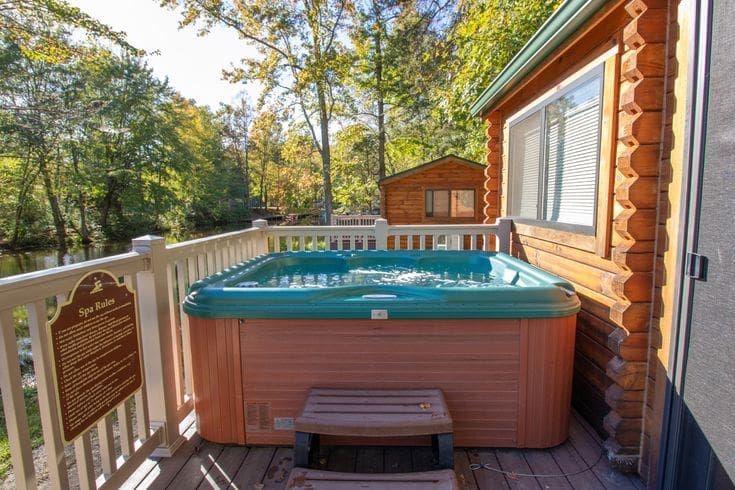
There's a moment on almost every hot tub getaway when someone sinks into the water, exhales, and says some version of "I needed this." It's such a familiar feeling that it's easy to write it off as just a nice mood — warm water, pretty view, glass of wine, done. But there's real physiology and neuroscience behind why a private hot tub overlooking Cool Springs Lake hits differently than a hot shower at home. Your cardiovascular system, your stress hormones, your sleep cycle, and even your brain's response to open water are all working in your favor the moment you step in.
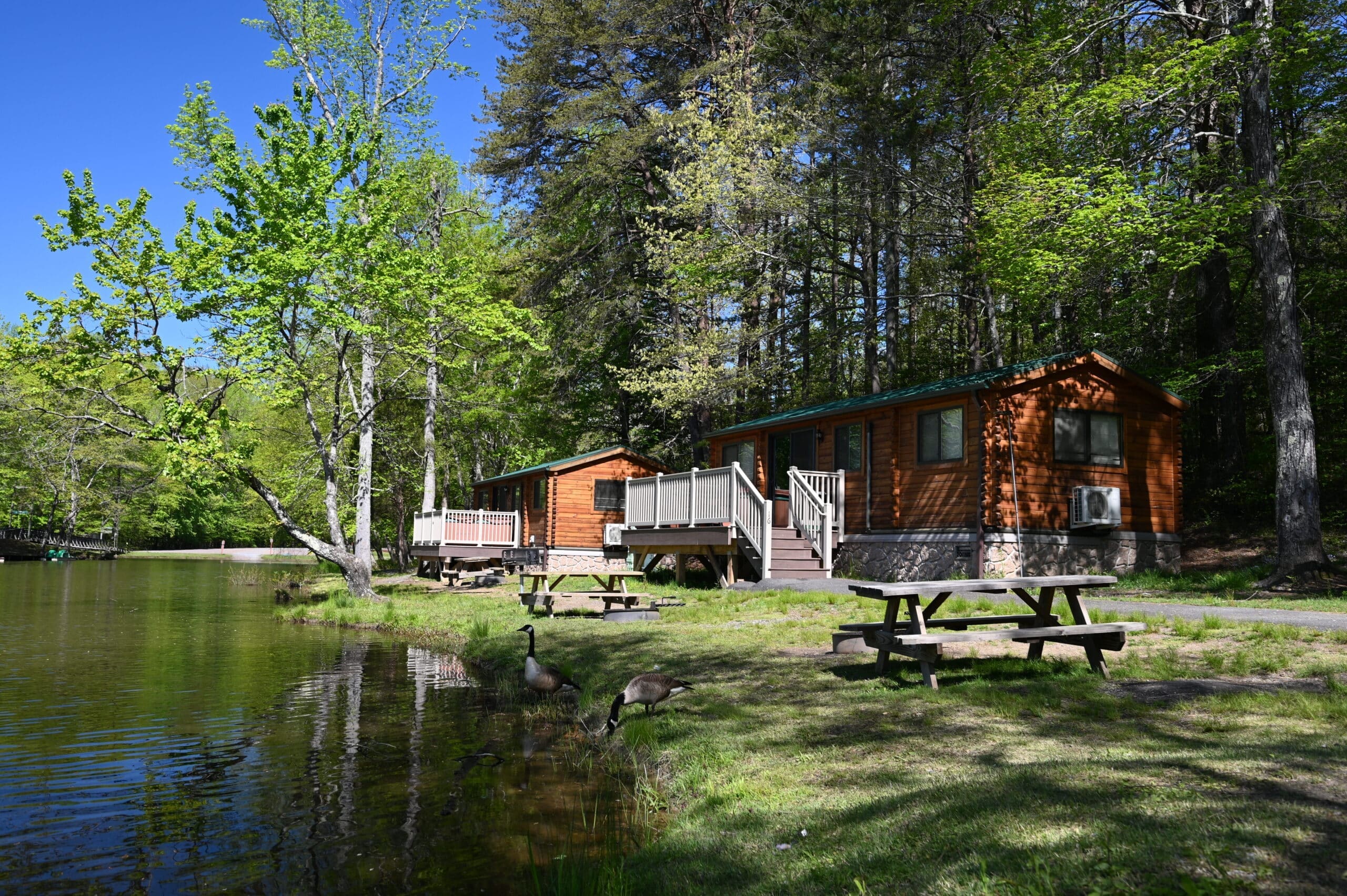
At Wilderness Presidential Resort, our Lakeside Camp Cabins pair a private hot tub with an actual lakefront setting — not a parking lot view or a shared deck. That combination isn't just a nice-to-have. Research on hydrotherapy and on what scientists call "blue space" suggests the two effects genuinely stack. Here's what's actually happening in your body during that soak, and why the lake view is doing more work than you'd guess.
It Starts With Warm Water: The Physiology of a Soak
The moment you lower yourself into 100–104°F water, your body starts a cascade of changes that have nothing to do with how the water feels and everything to do with how your circulatory system works.
Your blood vessels open up
Heat causes vasodilation — your blood vessels widen — which lowers resistance in your circulatory system and reduces the workload on your heart. A randomized crossover study out of the University of Otago found that both hot- and warm-water immersion measurably lowered 24-hour blood pressure in people with hypertension, and researchers have linked regular heat therapy to meaningfully lower long-term cardiovascular risk.
Buoyancy takes the weight off
Water buoyancy supports roughly 90% of your body weight when you're submerged to shoulder level. Your joints, spine, and muscles are essentially off duty for the first time all day — combined with heat softening tight tissue, this is why a soak is often the fastest way to unwind a back that's been hunched over a steering wheel or a laptop.
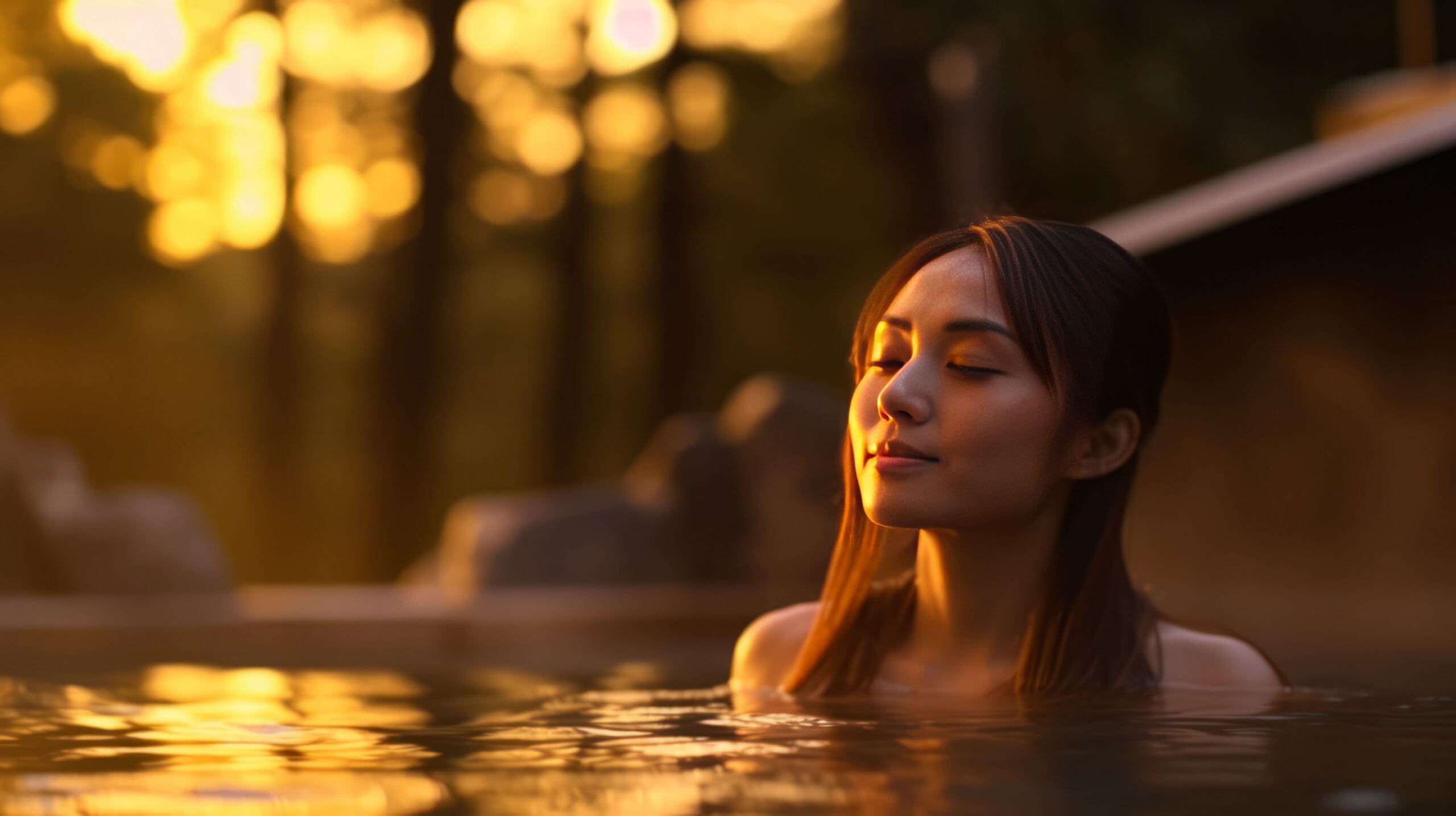
The Chemistry of Calm: Cortisol, Endorphins, and the "Off Switch"
The physical relaxation is only half the story. Warm water immersion also changes your brain and hormone chemistry in ways that are now well documented in clinical research.
Cortisol drops — measurably
Cortisol is your body's primary stress hormone, and chronically elevated levels are linked to anxiety, poor sleep, and a weakened immune system. Multiple clinical studies have used saliva testing to track cortisol before and after warm water immersion, and the pattern is consistent: levels drop significantly after a soak, with one 2018 study published in Evidence-Based Complementary and Alternative Medicine reporting a reduction comparable to what's seen after a moderate-intensity meditation session.
Your nervous system shifts gears
Warm water immersion activates the parasympathetic nervous system — the "rest and digest" branch that counteracts the fight-or-flight response your body defaults to under stress. This is a measurable shift, not just a feeling: heart rate variability changes in ways consistent with a genuine relaxation state.
Feel-good chemistry rises
As cortisol falls, research points to a corresponding rise in endorphins and other mood-related neurochemicals — the same category of chemical messengers responsible for the "runner's high." It's one reason a soak can leave you not just relaxed but genuinely happier for hours afterward.
In short: your body isn't just perceiving less stress in a hot tub. It's producing measurably less of the hormone that causes it.
Why a Hot Tub Might Be the Best Sleep Aid You're Not Using
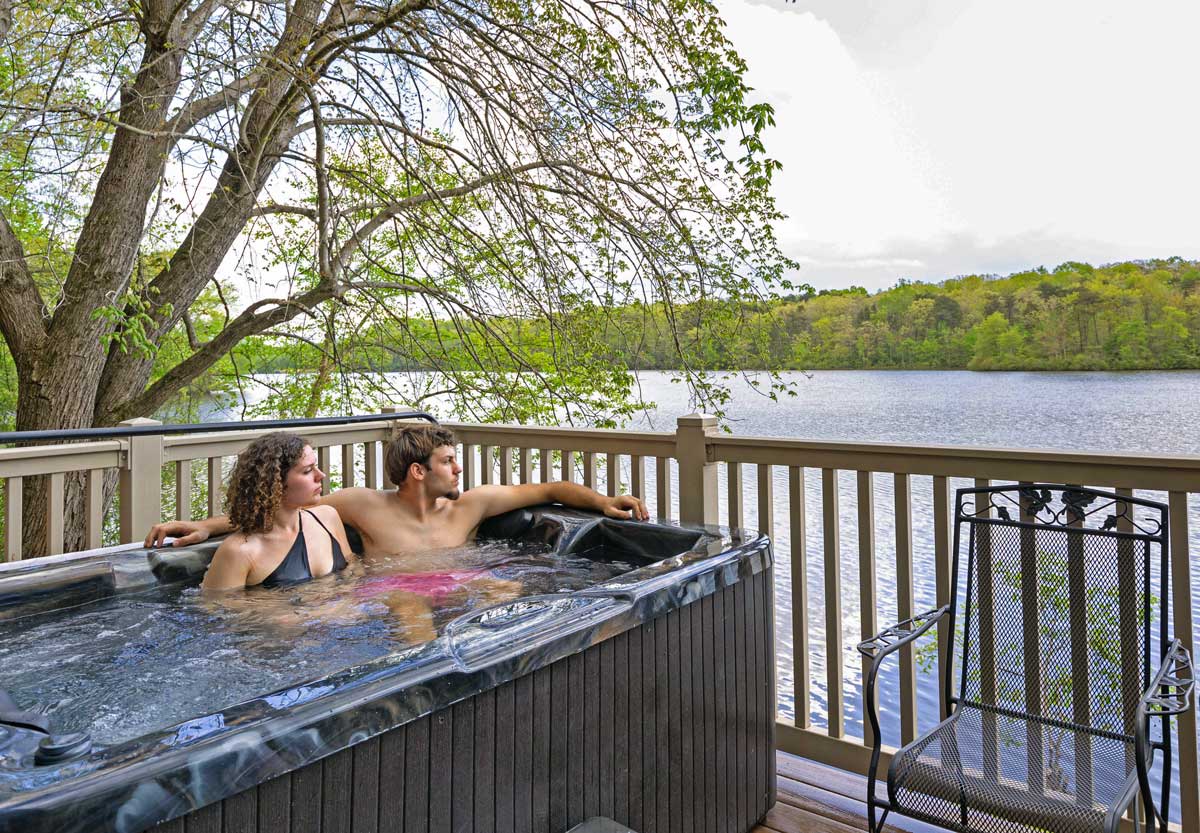
This is the part of hot tub science that surprises most people: soaking before bed doesn't just feel like a good pre-sleep ritual. It's backed by one of the more robust bodies of sleep research out there.
Your core body temperature naturally drops in the hour or two before you fall asleep, and that drop is one of the biological triggers that signals your brain it's time for sleep. A widely cited systematic review and meta-analysis from researchers at the University of Texas at Austin, published in Sleep Medicine Reviews, examined 17 studies on warm water immersion and sleep. The consistent finding: a warm bath or soak of 104–109°F, taken about 90 minutes before bed, speeds up the drop in core temperature by first pulling blood toward the skin's surface and releasing heat — which shortens the time it takes to fall asleep and improves overall sleep quality.
The "Blue Space" Effect: Why the Lake View Isn't Just Decoration
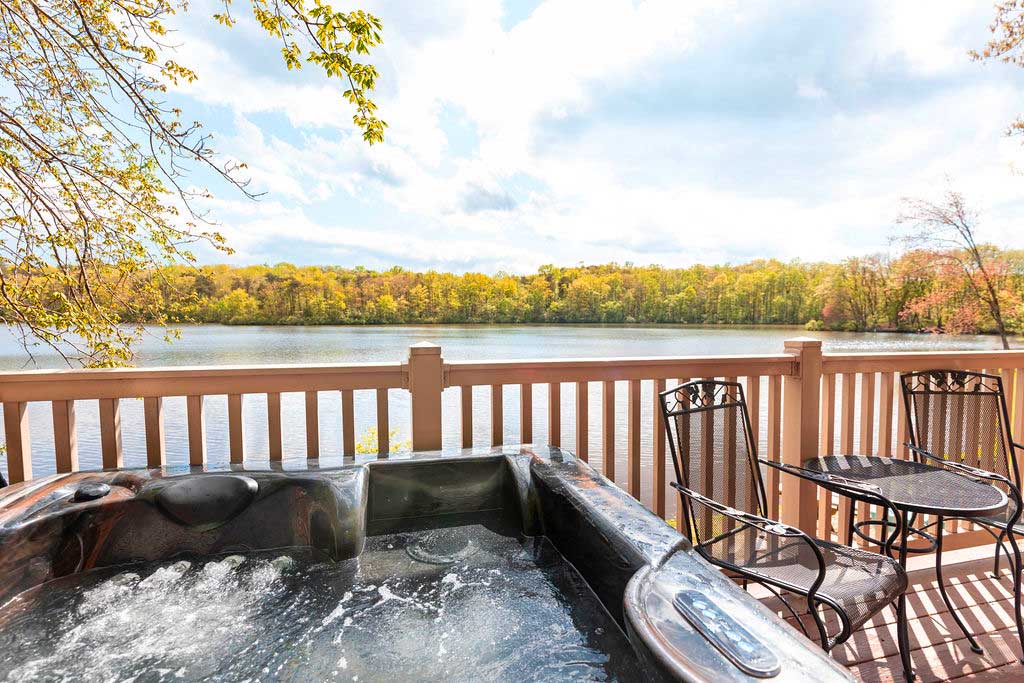
Here's what makes a lakefront hot tub stay different from a hot tub in your backyard: the water you're looking at is doing almost as much work as the water you're sitting in.
Environmental psychologists and public health researchers have spent the last decade studying what's now called "blue space" — natural environments centered on water. A 2020 review of more than 30 studies, highlighted by Scripps Health, found consistent evidence that time spent near water supports mental health and wellbeing, with effects that researchers believe come from several directions at once: natural sunlight, cleaner air, and lower noise pollution near water, the sensory stimulation of moving water and reflected light, and simply the psychological permission to disconnect that a water view seems to grant people. Large population studies have found that people living near coastlines — and, in more recent freshwater-specific research, near lakes — report better psychological wellbeing on average than those without that access.
That's the piece a hotel room or a backyard hot tub can't replicate. At a Lakeside Camp Cabin, you're not soaking in a hot tub that happens to be near a lake — you're getting the blue space effect and the hydrotherapy effect at the same time, layered with the sound of water, the absence of city noise, and, after dark, a sky far less polluted by artificial light than anywhere in the D.C. or Richmond metro areas.
Two Kinds of Relaxation, Working Together
Put it all together and a lakefront hot tub cabin stay is really delivering two separate, well-researched relaxation effects at once:
Hydrotherapy
The physiological relaxation of warm water — vasodilation, lower blood pressure, reduced cortisol, and a jump-start on your body's natural sleep signal.
Blue Space Exposure
The psychological restoration that comes specifically from being near open water in a natural, low-stimulation setting.
Neither effect requires the other to work. But when you combine them — which is exactly what happens when your private hot tub sits on a deck looking out over Cool Springs Lake — you get a kind of relaxation that's hard to manufacture anywhere else.
How to Get the Most Out of Your Soak
Who Benefits Most From This (Hint: Probably You)
- Remote workers and "workation" guests. If your stress shows up as tight shoulders and a mind that won't stop scrolling, the combination of physical muscle relief and forced screen-free time is often more effective than a weekend of trying to "relax on purpose" at home.
- Parents. A day spent supervising kids at the gem mine or the pool is its own kind of workload. An evening soak after the kids are asleep is frequently the first truly quiet twenty minutes parents get all day.
- Couples. Shared relaxation experiences — warm water, low lighting, no screens — are consistently associated with better connection and communication, simply because both people are in a calmer physiological state at the same time.
- Anyone recovering from a long week — or a long hike. The circulation and buoyancy benefits apply just as well to everyday stress as they do to sore legs after a day on the trails.
Frequently Asked Questions
Is a hot tub soak actually backed by science, or is this just marketing?
It's genuinely well studied. Cortisol reduction after warm water immersion has been measured in multiple clinical studies using saliva testing, the blood pressure effects of hot water immersion have been documented in randomized trials, and the sleep-onset benefits come from a peer-reviewed meta-analysis covering 17 separate studies. The blue space research is newer but growing quickly, with systematic reviews now covering dozens of studies across multiple countries.
How long should I soak to get the relaxation benefits?
Most of the measurable hormonal and cardiovascular benefits researchers have documented occur within 15–20 minutes. You don't need an hour-long soak to get real physiological value — though there's nothing wrong with staying longer if the view has you hooked.
Does the lake view really make a difference, or is that just atmosphere?
Based on the blue space research, it appears to be a genuine, separate effect from the hydrotherapy itself. Studies comparing water-adjacent natural settings to other environments have found measurable differences in reported stress, mood, and even heart and breathing rates.
What's the best time of day to soak for relaxation?
Any time will lower stress hormones, but if better sleep is part of your goal, aim for roughly one to two hours before bed. That timing lines up with your body's natural core-temperature drop and gives the "warm bath effect" documented in sleep research the best chance to work in your favor.
Feel It for Yourself
Book one of our Lakeside Camp Cabins with a private hot tub, spend a day on Cool Springs Lake, and let your evening soak do exactly what the science says it will.